

Why Paterson, NJ: the real estate investment case
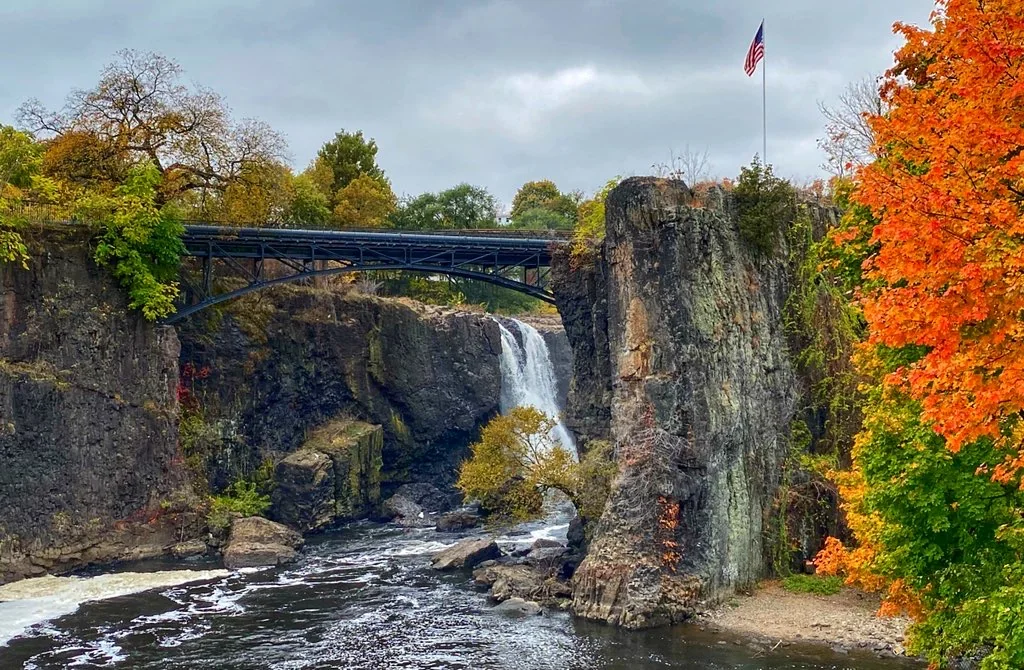
Photo: U.S. Geological Survey.
Paterson, New Jersey, once counted about 2,000 vacant and abandoned properties. Today it has fewer than 200. The city sits about 15 miles from Midtown Manhattan, most of its households rent, and much of its housing is more than 75 years old. New zoning and a long-term property-tax exemption have made it possible to build again on lots that sat empty for decades. This is the story of that turnaround, and why the partners behind Silk City Capital believe the work is far from finished.
How did Paterson become the Silk City?
Paterson was built around a waterfall. The Great Falls of the Passaic River drop 77 feet through the middle of the city (National Park Service). In 1791, Alexander Hamilton co-founded the Society for Establishing Useful Manufactures to put that water to work, and in 1792 the society bought 700 acres around the falls and established the city (National Park Service). By the late 1800s, Paterson's mills had made it the center of American silk manufacturing, and the name Silk City stuck (Rutgers Center for Civic Education).
The mills shaped the city's housing, and they still do. Workers needed homes within walking distance of the factories, so Paterson filled with narrow lots, most of them 25 by 100 feet, lined with two-family houses built tight to the street. About 45% of Paterson's housing dates from before 1950 (U.S. Census Bureau, ACS 2020–2024).
Why did so many Paterson lots sit empty?
When the mills closed, Paterson kept its houses and lost much of the reason to maintain them. A lot that suited a worker's home in 1900 didn't suit new construction a century later. Zoning required parking that a 25-foot lot could never fit, so a small new building rarely made financial sense.
So the buildings aged, and many owners stopped paying their property taxes. The city took properties back through tax sales, but an empty building produced no income for anyone. At the peak, a city survey counted about 2,000 vacant and abandoned properties (NorthJersey.com, Oct. 7, 2022).
How did Paterson turn vacant lots back into homes?
Around 2009, Surf Dinani, now CEO of Veloce Capital, and Charles Florio, CEO of Ania Management, started working together. Their approach was patient and unglamorous: buy buildings on the open market, do the work to stabilize them, lease and manage them well, refinance, and do it again. As the rules allowed, they built on the empty lots too.
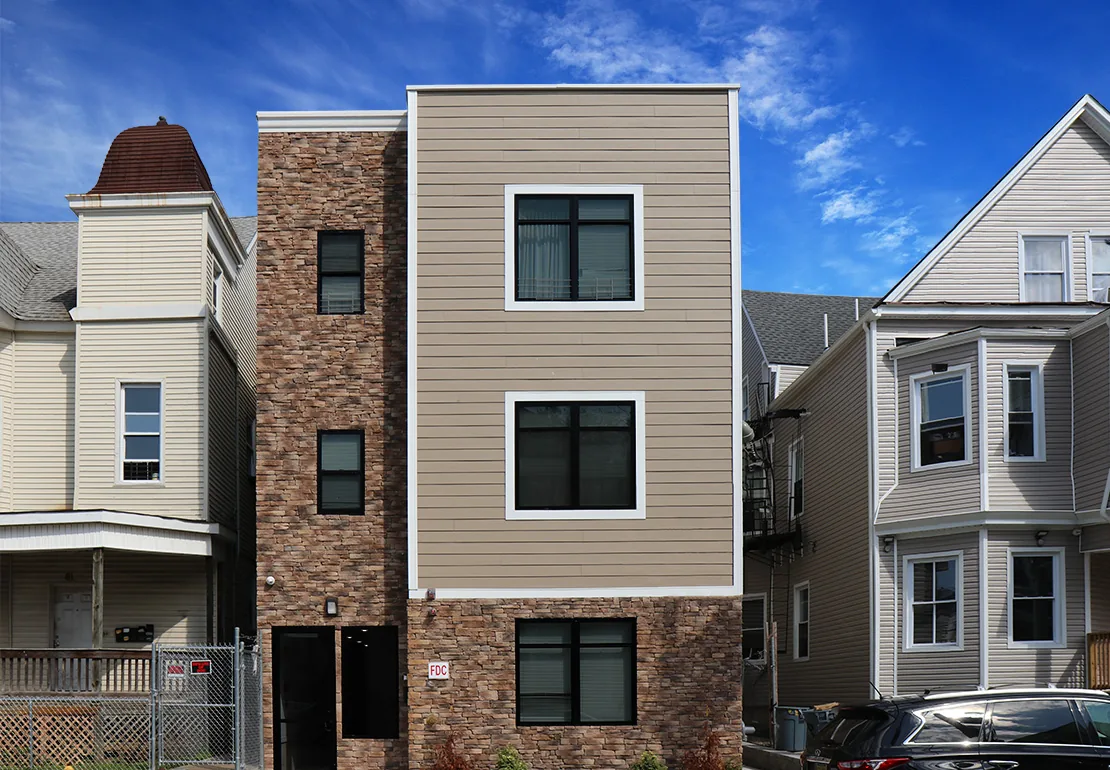
Today the city has fewer than 200 vacant and abandoned properties, according to Mayor André Sayegh (News 12 New Jersey, Aug. 2026). Charles estimates that Ania built on 80 to 85% of the lots that came off the list. NorthJersey.com wrote in 2022 that Florio had "led the charge in building new housing on what had been vacant land" (NorthJersey.com).
Charles is careful about how he describes the city's role. "I wouldn't say we're in partnership with the city, because we're not," he says. The city and the partners want many of the same things: empty lots back on the tax roll, more homes for the people who live here, and work for local trades. But the city sets the rules, and the partners build to them. Their projects go before the planning board like anyone else's, and the partners say they build without asking for variances.
For investors, that matters. Every project rests on rules the city has adopted in public, the zoning and redevelopment plans that any developer can read and build to. The flip side is that those rules can change, a risk covered below.
What changed in Paterson's zoning and property taxes?
Two changes made new construction work again.
More homes per lot. The redevelopment plans for Paterson's First, Fourth, and Fifth Wards allow more homes per lot (City of Paterson, Fourth Ward Redevelopment Plan), and in some cases they relax the parking rules that made small buildings impractical. By the partners' count, a 25-by-100 lot that once held a two-family house may now take 11 studio apartments, eight apartments, or four homes for sale.
A long-term tax exemption. Paterson is a Garden State Growth Zone. Under state law, the city exempts the value of qualifying new construction from property tax, while the land stays taxed at its existing value (N.J.S.A. 52:27D-489s; P.L. 2021, c. 232). A new building of five or more units is fully exempt for its first 10 years, then phases in until it pays full tax in year 30. New one- to four-family homes can receive a five-year exemption. Paterson is one of three New Jersey cities eligible for the 30-year exemption, and the only one in North Jersey. Each project still has to meet the program's requirements, including receiving its final certificate of occupancy by September 18, 2028.
Both sides gain. A lot that paid no tax starts paying again, and a new building can make financial sense from its first year. The partners say the five-year exemption also helps buyers of new two- to four-family homes afford their monthly payments. Many of those buyers live in one unit and rent out the others.
How short of housing is Paterson?
Short. About 73% of Paterson households rent (U.S. Census Bureau, ACS 2020–2024), and CommunityScale projects the city will need about 7,000 more homes between 2026 and 2031 (CommunityScale). The wider region is tight too: Northern New Jersey multifamily vacancy stood at 3.5% in the third quarter of 2026 (Matthews, Q3 2026).
Not everyone welcomes new buildings, and Charles has heard every version of the objection.
"Rents are high, and the same people are saying don't build more. You can't have it both ways. It's supply and demand."
Charles Florio, CEO, Ania Management
That arithmetic cuts both ways. Paterson's median household income is about $56,000 (U.S. Census Bureau, ACS 2020–2024), so new homes have to be priced for the people who live here. However large the shortage, local incomes set a ceiling on rents, and honest underwriting starts there.
Why do the partners see an opportunity now?
The zoning and tax changes that make new, quality buildings possible are in place today. And in Surf's view, existing buildings can currently be bought for less than it would cost to build them new, a window he sees roughly once every 10 to 15 years.
That is a judgment, not a forecast. It rests on things that can change: the priorities of a future city administration, the terms of future abatements, and the cost of building and borrowing. A fund focused on one city carries all of those at once. One city, full conviction: why we focus on Paterson explains what that focus means for investors.
Where does Silk City Capital fit?
Silk City Capital LP is a private real estate equity fund focused on Paterson, New Jersey, co-founded by Veloce Capital and Ania Management. It carries the partners' work across the full life of a property:
- securing the approvals that turn land into buildable sites;
- building new apartment buildings, townhomes, and mixed-use properties;
- acquiring existing apartment and mixed-use buildings and growing their income through renovation, leasing, and professional management;
- renovating homes to sell or to hold.
To see how those pieces connect, How Silk City creates value in Paterson real estate follows a single lot from empty ground to finished homes.
Paterson by the numbers
| Measure | Figure | Source |
|---|---|---|
| Households that rent | About 73% | U.S. Census Bureau, ACS 2020–2024 |
| Housing built before 1950 | About 45% | U.S. Census Bureau, ACS 2020–2024 |
| Median household income | About $56,000 | U.S. Census Bureau, ACS 2020–2024 |
| Additional homes needed | About 7,000, 2026–2031 | CommunityScale |
| Northern New Jersey multifamily vacancy | 3.5%, Q3 2026 | Matthews (CoStar data) |
| Vacant and abandoned properties | About 2,000 at the peak; fewer than 200 in 2026 | NorthJersey.com, Oct. 2022; Mayor André Sayegh via News 12 New Jersey, Aug. 2026 |
Frequently asked questions
Is Paterson, NJ, a good place to invest in real estate?
The partners see strong fundamentals for investors who underwrite carefully. It is New Jersey's third-largest city, with 161,793 residents as of July 2025 (U.S. Census Bureau, Vintage 2025). Median rent rose about 30%, from $1,193 to $1,548, between the Census Bureau's 2015–2019 and 2020–2024 estimates (ACS 2015–2019; ACS 2020–2024), and rental occupancy in the Passaic/Sussex Counties submarket stood at 98.5% in the second quarter of 2026 (Berkadia, Mid-Year 2026 (Q2 2026 data)). The risks are real too, including approvals, construction costs, policy changes, and rents limited by local incomes, and results depend on how well each property is bought, built, and managed.
Why do most Paterson households rent?
About 73% of Paterson households rent (U.S. Census Bureau, ACS 2020–2024). Part of the reason is history: much of the city's housing is older two-family and multifamily buildings, built for mill workers who rented near the factories. The bigger reason today is cost. Paterson's median household income is about $56,000 (ACS 2020–2024), while the median home sold for about $605,000 in the three months to August 2026 (Redfin), more than 10 times income. With 30-year mortgage rates near 7% in November 2026 (Freddie Mac), buying is out of reach for many households, so more of them rent, and for longer.
How high are property taxes in Paterson?
Paterson's 2025 general tax rate was 5.335 per $100 of assessed value, an effective rate of about 2.4% of market value (New Jersey Division of Taxation, 2025 General Tax Rates). At that rate, property tax is a major cost for any new building, which is why the Growth Zone exemption can decide whether a project makes financial sense.
How far is Paterson from New York City?
Paterson is about 15 miles in a straight line from Midtown Manhattan, or about 20 miles by car. NJ Transit's Main Line serves the city, with trips of about 45 minutes to New York Penn Station with a transfer at Secaucus, and 36 to 39 minutes to Hoboken (NJ Transit, fall 2026 schedules; times approximate).
Talk with the team behind the turnaround. If you'd like to understand how Silk City Capital invests in Paterson, and whether the fund fits your portfolio, schedule a call with our team.
Sources
- National Park Service, Paterson Great Falls National Historical Park, "City of Industry." https://www.nps.gov/pagr/historyculture/the-birthplace-of-the-american-industrial-revolution.htm
- National Park Service, Paterson Great Falls National Historical Park brochure (2023). https://www.npshistory.com/publications/pagr/brochures/2023.pdf
- Rutgers Center for Civic Education, "Great Falls, Paterson, NJ." https://civiced.rutgers.edu/nj-lessons/nj-lessons-elementary/elementary-article/474-great-falls-the-use-of-water-power-and-the-start-of-industrialization
- U.S. Census Bureau, American Community Survey 5-Year Estimates, 2020–2024, Tables DP03 and DP04, Paterson city, New Jersey. https://data.census.gov/table/ACSDP5Y2024.DP04?g=160XX00US3457000
- Joe Malinconico, "Paterson's mayor wants to revise laws regulating vacant property. Here's how," NorthJersey.com (Paterson Press), Oct. 7, 2022. https://www.yahoo.com/news/patersons-mayor-wants-revise-laws-081607314.html
- News 12 New Jersey, "Paterson residents push back on YWCA redevelopment plan," Aug. 25, 2026. https://newjersey.news12.com/paterson-residents-push-back-on-ywca-redevelopment-plan
- City of Paterson, Fourth Ward Redevelopment Plan (Feb. 2017). https://www.patersonnj.gov/egov/documents/1525360415_49082.pdf
- N.J.S.A. 52:27D-489s (P.L. 2013, c. 161, §24). https://law.justia.com/codes/new-jersey/2021/title-52/section-52-27d-489s/
- P.L. 2021, c. 232 (Assembly No. 5683), New Jersey Legislature, https://pub.njleg.gov/bills/2020/AL21/232_.HTM; and Office of Legislative Services, Legislative Fiscal Estimate for Assembly No. 5683 (June 17, 2021), which names Atlantic City, Paterson, and Trenton as the three "government-restricted municipalities" eligible for the 30-year exemption, https://pub.njleg.gov/bills/2020/A9999/5683_E1.HTM
- CommunityScale, Paterson, NJ housing dashboard, 2026–2031 projection. https://app.communityscale.io/dashboard/municipality/3403157000/Paterson-NJ
- Matthews, "Northern New Jersey, NJ Multifamily Market Report Q3 2026" (CoStar data). https://www.matthews.com/insights/northern-new-jersey-multifamily-q3-2026
- Redfin, Paterson, NJ housing market (median sale price, three months to August 2026). https://www.redfin.com/city/14759/NJ/Paterson/housing-market
- Freddie Mac, Primary Mortgage Market Survey, Nov. 5, 2026. https://www.freddiemac.com/pmms
- U.S. Census Bureau, City and Town Population Totals: 2020–2025 (Vintage 2025). https://www.census.gov/data/datasets/time-series/demo/popest/2020s-total-cities-and-towns.html
- U.S. Census Bureau, American Community Survey 5-Year Estimates, 2015–2019, Table DP04, Paterson city, New Jersey. https://data.census.gov/table/ACSDP5Y2019.DP04?g=160XX00US3457000
- Berkadia, Mid-Year 2026 (Q2 2026 data), Northern New Jersey multifamily report. https://www.berkadia.com/multifamily-reports/
- New Jersey Division of Taxation, 2025 General Tax Rates. https://www.nj.gov/treasury/taxation/pdf/lpt/gtr/2025taxrates.pdf
- NJ Transit, Main Line schedules, fall 2026. https://www.njtransit.com
Market data come from the third-party sources cited, as of the dates shown, and have not been independently verified. Statements attributed to Surf Dinani and Charles Florio reflect their own views and estimates.
Track record reflects the prior experience of Veloce Capital and Ania Management and is not the performance of Silk City Capital. Past performance does not indicate future results.
Ania Management, a co-founder of Silk City Capital, may provide services to Fund investments and be compensated for them, which may create conflicts of interest. See Disclosures.